You’ve done a traditional escape room—maybe even a few. You’ve searched for hidden keys, decoded ciphers, and raced against a 60-minute clock. It was fun. But now you’re hearing about VR escape rooms, and you’re wondering: Is it actually better, or just a gimmick?
Short answer: They’re different experiences that excel at different things. This guide will help you decide which is right for your group.
In this comparison, you’ll learn:
- Exactly how VR escape rooms differ from traditional ones
- Which type offers better puzzles, immersion, and replayability
- Real cost comparisons with honest value assessments
- Who should choose VR vs. traditional
- How to pick the perfect escape room for your occasion
Let’s break it down.
The Fundamental Difference
Traditional Escape Rooms: Physical World, Physical Puzzles
You enter a themed room—a detective’s office, a mad scientist’s lab, a prison cell. Everything you see and touch is real. Locks need physical keys. Blacklights reveal hidden messages. Magnets move mechanisms.
The experience: Tactile, grounded, and satisfying in a tangible way.
VR Escape Rooms: Impossible Worlds, Unlimited Possibilities
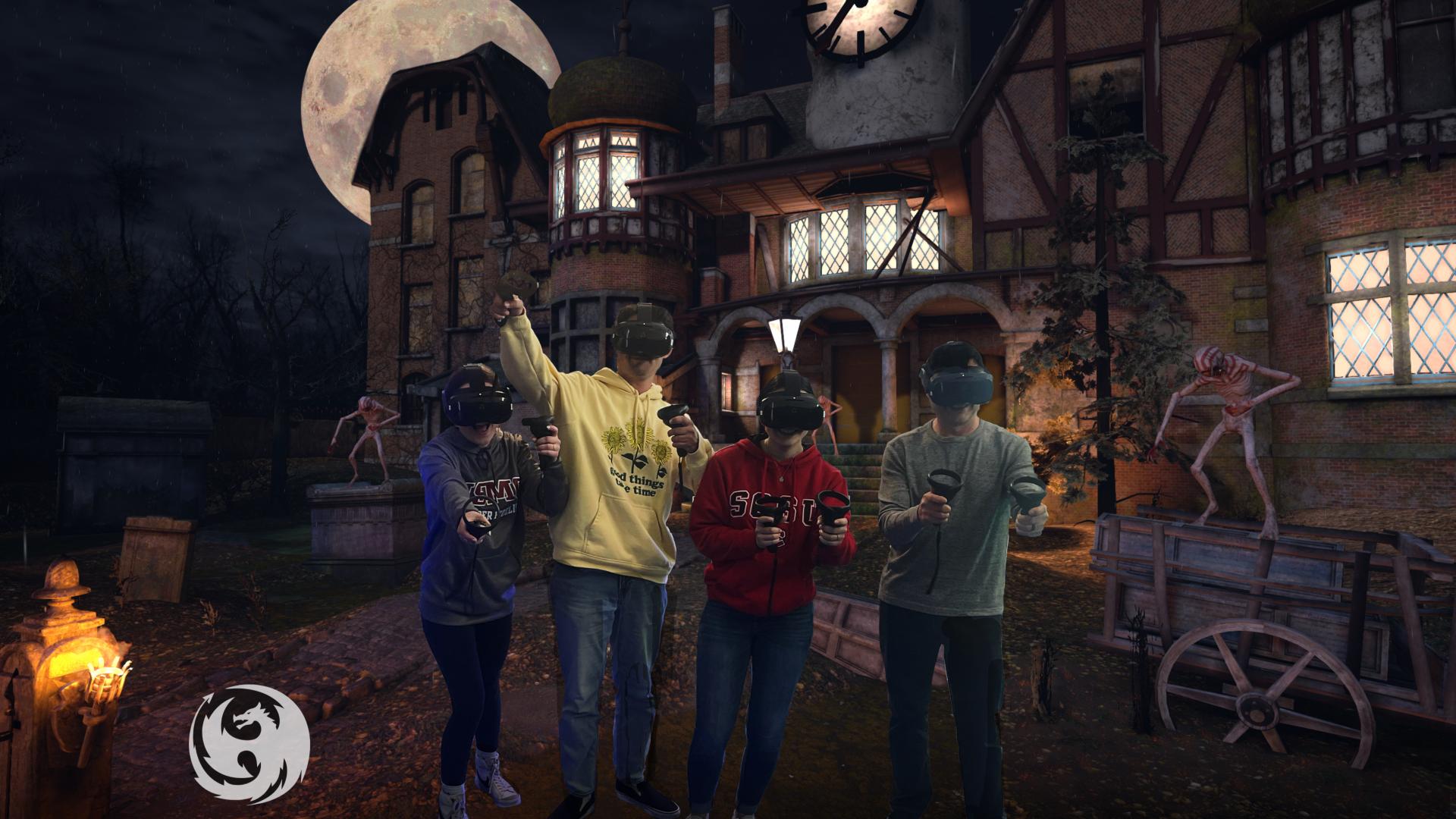
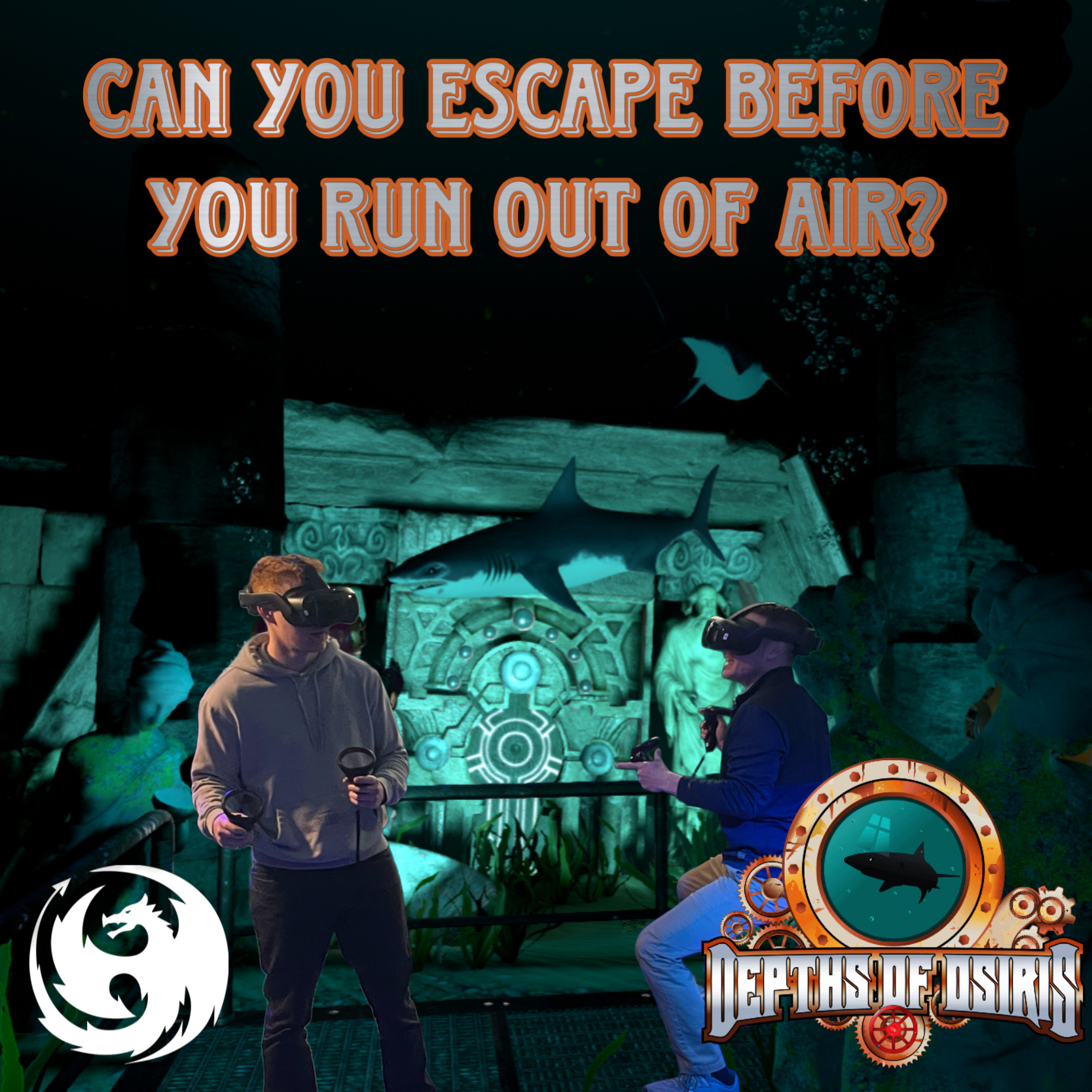
You put on a headset and enter a world that couldn’t exist physically. You might explore an underwater temple, manipulate time-bending machinery, or navigate a pirate ship in a storm. The puzzles interact with the impossible environment.
The experience: Mind-bending, immersive, and free from physical constraints.
Head-to-Head Comparison
1. Environment & Immersion
Traditional Escape Rooms:
- Physical rooms with themed decorations
- Limited by construction costs and space
- You know you’re in a room—immersion has boundaries
- Atmosphere created through lighting, sound, and props
- Environment stays static
VR Escape Rooms:
- Unlimited environments (underwater, space, floating castles)
- No construction constraints—imagination is the only limit
- Full 360° immersion—your brain believes you’re there
- Dynamic environments that change, react, and surprise
- Walking through impossible spaces feels real
Winner: VR for immersion depth. Traditional escape rooms can be beautifully designed, but they can’t put you on a pirate ship in a storm or inside an alien spacecraft.
Real example: In Pirates Plague, you physically walk across a creaking deck as waves crash around you. No traditional room can recreate that sensation.
2. Puzzle Design & Variety
Traditional Escape Rooms:
- Physical puzzles: locks, keys, hidden compartments
- Logic puzzles: ciphers, patterns, deduction
- Prop-based challenges: manipulating physical objects
- Limited by what can be built and maintained
- Puzzles must work mechanically every time
VR Escape Rooms:
- All traditional puzzle types, plus:
- Physics-defying challenges (manipulate gravity, time, scale)
- Environmental interaction (reshape the world around you)
- Multi-dimensional thinking (puzzles that use 3D space creatively)
- Magical mechanics (teleportation, object transformation)
- Puzzles that would be impossible or dangerous physically
Winner: VR for variety and creativity. Traditional rooms offer satisfying tactile puzzles, but VR opens unlimited design possibilities.
Real example: In Chronosphere Chronicles, you manipulate time itself—rewinding events, viewing past versions of rooms, and solving puzzles across temporal dimensions. No physical room can offer this.
3. Tactile Satisfaction
Traditional Escape Rooms:
- Physical keys turning in locks: satisfying
- Discovering hidden compartments: exciting
- Manipulating real props: tangible
- Weight and texture of objects: grounding
- The “click” of solving a physical puzzle: rewarding
VR Escape Rooms:
- Haptic controllers provide vibration feedback
- Virtual objects feel responsive but not “real”
- Less tactile satisfaction
- Compensated by visual and spatial wow-factor
- Improving rapidly with haptic technology
Winner: Traditional for pure tactile satisfaction. There’s something irreplaceable about a physical key in a real lock.
4. Group Dynamics & Communication
Traditional Escape Rooms:
- Groups of 4-10 typical
- Natural conversation in shared space
- Can physically pass objects to teammates
- Easier to see what others are working on
- Sometimes crowded in small rooms
VR Escape Rooms:
- Groups of 2-6 optimal
- Voice communication feels natural in VR
- See teammates as avatars in virtual space
- Each person can explore different areas simultaneously
- No physical crowding—everyone has space
Winner: Tie. Both offer excellent group experiences, just differently. VR excels at 2-4 person intimate groups; traditional rooms handle larger groups better.
5. Accessibility & Inclusivity
Traditional Escape Rooms:
- May require climbing, crawling, or physical strength
- Dim lighting can challenge those with vision issues
- Sound-based clues may exclude hearing-impaired
- Physical space limitations affect mobility access
- Often not ADA compliant
VR Escape Rooms:
- Seated options available for mobility limitations
- Visual and audio elements can be adjusted
- Less physical exertion required
- Inclusive for different body types and abilities
- Accommodates glasses easily
Winner: VR for accessibility. Well-designed VR escape rooms can accommodate a wider range of abilities.
6. Replayability
Traditional Escape Rooms:
- One playthrough per room—you know the puzzles
- Must find new venues for new experiences
- Rooms change slowly (new builds are expensive)
- “Solved” rooms lose all mystery
VR Escape Rooms:
- Multiple games available at single location
- New experiences added regularly
- Different paths/endings in some games
- Technology updates improve existing experiences
- Return for different games easily
Winner: VR decisively. A single VR venue can offer 30+ different escape experiences.
7. Pricing & Value
Traditional Escape Rooms:
- $28-40 per person typical
- 60 minutes standard
- One experience per visit
- Location variety requires travel
VR Escape Rooms:
- $33-45 per person typical
- 45-60 minutes typical
- Multiple games available per visit
- One location, many experiences
Value comparison for a group of 4:
| Factor | Traditional ($35/person) | VR ($40/person) |
|---|---|---|
| Total cost | $140 | $160 |
| Experience variety | 1 room | Choice of 10+ games |
| Replayability | None (room solved) | High (return for other games) |
| Immersion level | Good | Exceptional |
| Technology wow-factor | Low | High |
Winner: VR for overall value, despite slightly higher per-person cost. The variety and replayability make VR a better long-term investment.
8. Scare Factor & Intensity
Traditional Escape Rooms:
- Atmosphere can be spooky, rarely truly scary
- No jump scares (safety concerns)
- Horror themes rely on decoration and sound
- You always know you’re in a room
VR Escape Rooms:
- Can be genuinely intense (you choose the game)
- Horror games leverage full immersion
- Zombie games feel viscerally real
- Non-scary options equally available
- Choose your intensity level
Winner: VR if you want intensity; Traditional if you want lighter experiences. VR offers more range.
Who Should Choose VR Escape Rooms?
VR escape rooms are ideal if you:
✅ Want maximum immersion and wow-factor
✅ Are looking for something genuinely new and different
✅ Have a smaller group (2-4 people is ideal)
✅ Value variety and replayability
✅ Want impossible environments (underwater, space, fantasy)
✅ Are celebrating a special occasion worth remembering
✅ Enjoy technology and innovation
✅ Have done several traditional escape rooms already
Top VR escape room picks:
- Pirates Plague - Nautical mystery
- Mission Z - Zombie apocalypse thriller
- Riddle of Ruins - Ancient temple adventure
Who Should Choose Traditional Escape Rooms?
Traditional escape rooms are ideal if you:
✅ Love the tactile satisfaction of physical puzzles
✅ Have a larger group (8-10 people)
✅ Prefer lower-tech, grounded experiences
✅ Want a “classic” escape room experience
✅ Are introducing someone nervous about technology
✅ Prefer not to wear VR headsets
✅ Are seeking a specific themed room that only exists physically
The Best of Both Worlds: How to Experience Each
Try VR Escape Rooms When:
- Date night (intimate 2-person experience)
- Birthday celebrations (memorable and unique)
- Team building (communication-focused)
- Special occasions worth extra investment
- You want to be genuinely amazed
Try Traditional Escape Rooms When:
- Large friend group outing (8+ people)
- First escape room experience for nervous players
- You want pure puzzle satisfaction without tech
- Budget is the primary concern
Real Player Feedback: VR vs. Traditional
What VR Escape Room Players Say:
“I’ve done probably 15 traditional escape rooms. The VR one at Escape To VR was on another level. Walking through that pirate ship felt REAL.” — Jessica M., San Diego
“My husband and I do escape rooms for every anniversary. This year we tried VR and it blew away anything we’ve done before.” — Rachel K., Carlsbad
“The puzzles were just as good as any escape room, but the environment… I can’t even describe it. You have to experience it.” — Marcus T., Oceanside
What Traditional Escape Room Players Say:
“I love the feeling of actually turning a key in a lock. VR is cool but doesn’t replace that.” — David L., La Jolla
“For our big group of 10, traditional was easier to coordinate. But for smaller groups, I’d pick VR.” — Amanda S., San Diego
Making Your Decision: Quick Guide
| Your Priority | Choose |
|---|---|
| Maximum immersion | VR |
| Tactile puzzles | Traditional |
| Group of 2-4 | VR |
| Group of 6+ | Traditional |
| Special occasion | VR |
| Budget-focused | Traditional (slightly) |
| First-timer (nervous) | Traditional |
| First-timer (excited) | VR |
| Variety seeker | VR |
| Horror/intensity | VR |
| Lighter experience | Either |
The Verdict
Traditional escape rooms are satisfying, social, and proven. They offer tactile puzzle satisfaction and work well for larger groups.
VR escape rooms are transformative, immersive, and unforgettable. They offer impossible environments, unlimited puzzle creativity, and experiences you simply can’t get anywhere else.
Our recommendation: If you haven’t tried VR escape rooms yet, you’re missing something genuinely new in entertainment. The technology has matured to the point where it’s not a gimmick—it’s a superior experience for most players.
Start with a VR escape room for your next special occasion. You might never go back to traditional.
Ready to Try VR Escape Rooms?
Experience San Diego’s best VR escape rooms at Escape To VR in Carlsbad.
Popular VR Escape Rooms:
- Pirates Plague - Nautical mystery adventure
- Mission Z - Zombie apocalypse thriller
- Riddle of Ruins - Ancient temple exploration
Location: 2525 El Camino Real Ste 161, Carlsbad, CA 92008 Phone: [(760) 625-0055](tel:+17606250055
Have you tried both VR and traditional escape rooms? We’d love to hear your thoughts. Tag us @escapetovr on Instagram with your experience!
Written by
VR Experience Director at Escape To VR. Carlsbad's premier free-roam VR arena — escape rooms, action games, and parties for up to 6 players.
Experience the adventure yourself.
Book a 60-minute free-roam VR session for up to 6 players.